AI Washing: When Layoffs Wear an AI Costume
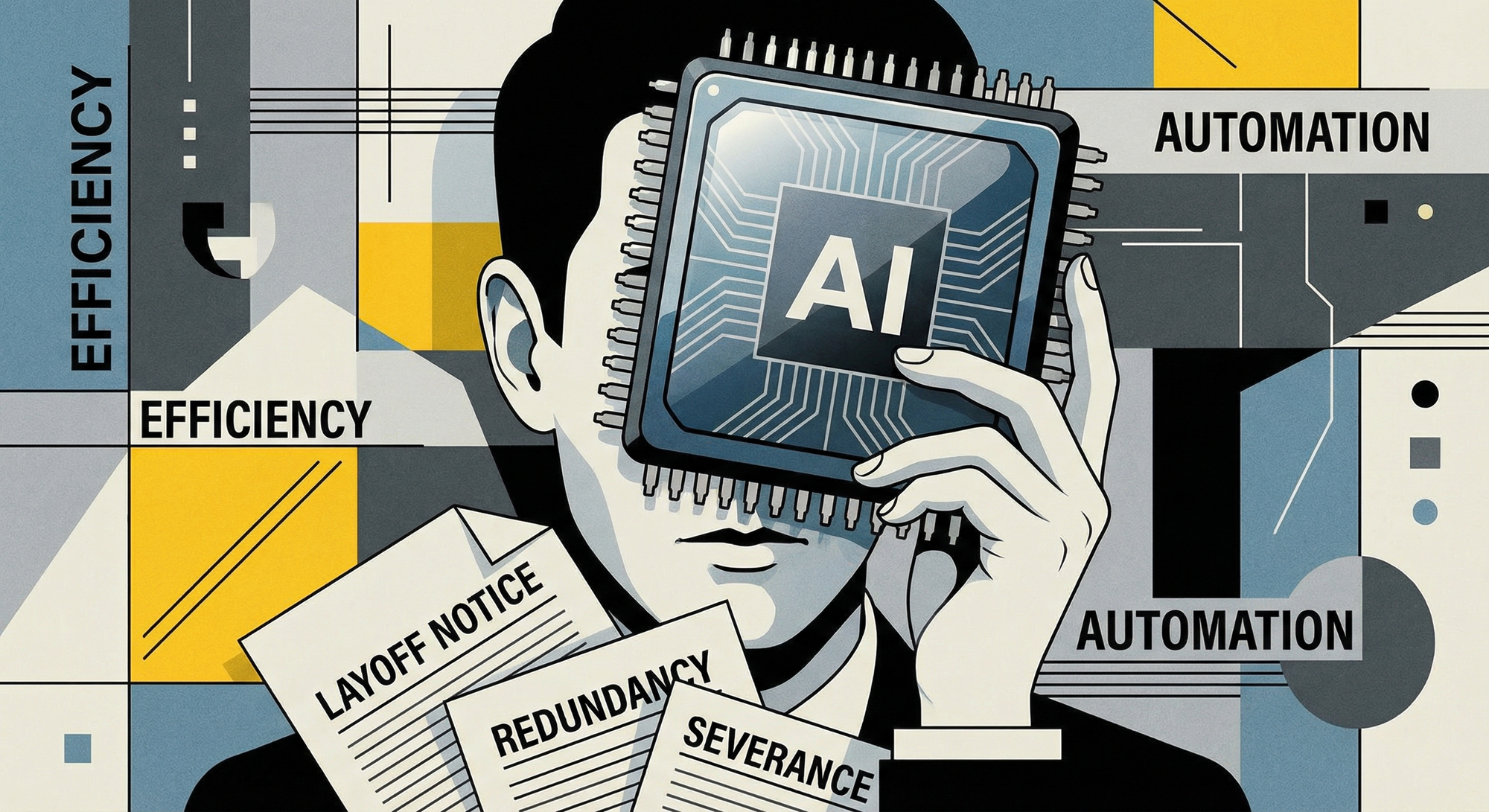
The marketing world is abuzz, and not always with genuine innovation. For months, we've seen a disturbing trend accelerate: companies—from tech giants to established marketing services firms—announcing significant workforce reductions, often cloaked in the shiny veneer of "AI-driven restructuring." It's become the corporate equivalent of an emperor's new clothes, where the layoffs are starkly real, but the AI justification often feels like a thinly veiled excuse for broader cost-cutting or strategic missteps. This isn't just about semantics; it's eroding trust, creating talent anxiety, and muddying the waters of genuine AI transformation within our industry.
This phenomenon, which we're calling "AI Washing," is more insidious than previous corporate jargon. Unlike "synergies" or "right-sizing," attributing layoffs to AI taps into a primal fear of technological obsolescence, making it harder for the displaced to question the narrative. When [Google announced further cuts in its advertising sales teams](https://www.cnbc.com/2026/02/google-cuts-ad-sales-jobs-as-ai-reshapes-industry.html) last month, framed as an optimization for AI-powered solutions, the market largely nodded. But behind the headlines, many are asking: is this really about AI's current capabilities, or is AI a convenient, future-proof scapegoat for reducing headcount amidst ongoing economic pressures and a shifting ad landscape? The distinction matters for every independent agency leader trying to navigate this volatile terrain.
THE BROADER CONTEXT
The current AI hype cycle has reached a critical inflection point, moving from aspirational promises to concrete (and sometimes brutal) operational shifts. Early 2026 has seen an undeniable acceleration in the deployment of generative AI tools across content creation, media planning, and data analytics. [Adobe's Firefly 3.0](https://www.adobe.com/sensei/firefly.html) and [Google's Gemini Ultra](https://blog.google/technology/ai/google-gemini-ultra-ai-model-2026/) are not just buzzwords; they are capable of producing high-quality drafts, iterating creative variants, and synthesizing data at speeds unimaginable even 18 months ago. This genuine capability is the fertile ground for "AI Washing" because it lends credibility to the narrative that human roles are truly becoming redundant.
However, the reality on the ground often diverges sharply from the PR spin. A recent [Gartner 2026 Marketing Technology Survey](https://www.gartner.com/en/articles/marketing-technology-survey-2026-key-findings) revealed that while 85% of CMOs claim AI is a top investment priority, only 30% reported concrete, scaled AI integrations that demonstrably reduced human labor beyond basic automation. This disparity suggests that many companies are investing in AI, but the impact on existing roles isn't always direct or immediate. Instead, AI is often being cited as the catalyst for broader "efficiency mandates" or "strategic realignments" that might have been necessary regardless, driven by factors like stagnant growth, market saturation, or the lingering effects of a tighter economic climate that began in late 2023.
Consider the holding companies. [WPP recently announced a multi-year, multi-billion dollar investment in AI](https://www.wpp.com/news/2026/01/wpp-ai-investment-strategy), promising to embed it into every facet of its operations. Yet, whispers within the industry suggest that some of these "AI-driven" efficiencies are translating into the quiet phasing out of junior and mid-level creative and production roles across several agencies. It’s a classic corporate maneuver: trumpet the innovation, then quietly cut costs under its banner. Meanwhile, smaller, more agile AI-first consultancies like [AssemblyAI](https://www.assemblyai.com/) or bespoke creative AI shops are actually hiring for roles that blend creative strategy with prompt engineering, highlighting a fundamental disconnect in how traditional players are approaching the talent question.
This trend isn't limited to the agency world. Brands themselves are guilty. [Unilever's recent announcement of "AI-powered marketing transformation"](https://www.unilever.com/news/2026/unilever-ai-transformation-marketing/) was quickly followed by reports of significant reductions in its internal content creation teams. While some roles undoubtedly benefit from AI augmentation, the scale of these cuts often suggests a deeper agenda. The underlying competitive force here is the relentless pursuit of margin and the pressure from shareholders to demonstrate forward-thinking efficiency. AI offers a compelling, albeit sometimes disingenuous, narrative to justify these actions in a market hungry for technological solutions.
WHY IT MATTERS
The strategic implications of "AI Washing" are profound, shaping the marketing ecosystem for the next 6-12 months and beyond. First, it's creating a pervasive sense of anxiety among the talent pool. When seemingly competent professionals are laid off with the explanation that "AI can do their job," it sends a chilling message. This fear can stifle creativity, discourage upskilling in adjacent areas, and potentially drive skilled marketers out of the industry entirely, creating a long-term brain drain that the industry can ill afford. Agencies that fail to address this internal narrative risk losing their best people to more transparent and supportive employers.
Second, client trust is at stake. Sophisticated clients are not naive. If agencies pitch AI as a transformative tool that delivers superior results and efficiency, yet simultaneously use it as a blanket excuse for workforce reductions without clear demonstrations of value, it breeds cynicism. Clients want tangible ROI, not just buzzwords. They'll scrutinize invoices more closely, questioning if the promised AI efficiency translates to lower costs or merely higher agency margins. Agencies that can't articulate a clear value proposition for their AI integration, beyond just cost savings from reduced labor, will struggle to differentiate themselves in a crowded market.
Furthermore, this trend risks misallocating investment and stifling genuine innovation. If companies are using AI as a convenient label for general cost-cutting, they might not be investing in the right AI capabilities or fostering the right skills internally. It creates an environment where performative AI adoption is prioritized over truly strategic integration. Agencies might rush to acquire AI tools or declare themselves "AI-first" without a deep understanding of how these tools genuinely enhance their unique value proposition, leading to wasted resources and superficial applications that don't move the needle for clients.
Finally, the "AI Washing" narrative can inadvertently lower the perceived value of human expertise. While AI excels at repetitive tasks, data synthesis, and content generation, it still lacks the nuanced strategic thinking, emotional intelligence, cultural understanding, and genuine creativity that human marketers bring. If the industry implicitly suggests that AI can replace these higher-order functions, it devalues the very skills that will be most critical in a world augmented by AI: strategic oversight, ethical judgment, and truly original concept development. This could lead to a race to the bottom, where marketing becomes commoditized, driven by algorithms rather than insight.
THE AGENCY ANGLE
Independent agency leaders cannot afford to be passive observers of this trend. Here are 3-4 specific, actionable moves to navigate the "AI Washing" era and position your agency for sustainable growth:
1. Cultivate a Transparent & Reskilling-First Talent Strategy: Don't let your team fear the robot. Instead of simply "restructuring" roles away, invest aggressively in upskilling and reskilling your existing talent. Launch an internal "AI Academy" or partner with specialized education providers like [General Assembly](https://generalassemb.ly/courses/ai-training) or [Coursera for Business](https://www.coursera.org/business) to train your creatives, strategists, and account managers in prompt engineering, AI tool integration, and ethical AI usage. Communicate clearly which roles will be augmented, which will evolve, and demonstrate a clear path for growth within your organization. This proactive approach fosters loyalty, retains institutional knowledge, and ensures your team is equipped for the future, rather than fearing it.
2. Articulate AI's Value as an Augmentor, Not a Replacer: Shift the narrative in client pitches and internal discussions. Your agency's AI strategy shouldn't be about how AI replaces humans to cut costs, but how it augments human intelligence to deliver superior outcomes. Focus on how AI enables hyper-personalization at scale, unlocks deeper audience insights, accelerates creative iteration cycles, or optimizes media spend with unprecedented precision. For example, instead of saying "AI will write your copy cheaper," say "Our AI-powered insights engine allows us to generate 50 unique ad variants tailored to specific micro-segments, driving a [measurable uplift] in conversion rates, while our human creatives refine the core message and ensure brand voice integrity." Emphasize the human-in-the-loop process that ensures quality, ethics, and strategic alignment.
3. Conduct a Surgical AI Impact Audit, Not a Sweeping Cut: Before making any talent decisions, conduct a rigorous, honest internal audit. Identify specific tasks and workflows where current AI capabilities genuinely offer a step-change in efficiency or quality, freeing up human talent for higher-order strategic work. Differentiate between tasks that can be fully automated (e.g., basic report generation, initial content drafts) and those that require human oversight, refinement, and strategic judgment (e.g., brand strategy, client relationships, ethical review, truly breakthrough creative concepts). This precise approach helps avoid indiscriminate layoffs and allows you to reallocate human talent to areas where their unique skills are truly indispensable and generate higher value.
4. Champion Ethical AI and Human Oversight: Position your agency as a leader in responsible AI implementation. Clients are increasingly concerned about bias, data privacy, and brand safety in AI-generated content. Develop clear internal guidelines for ethical AI use, including robust review processes for AI-generated outputs. Emphasize that AI is a tool, and human oversight is paramount for maintaining brand integrity, cultural sensitivity, and legal compliance. By showcasing a commitment to ethical AI, you not only differentiate your agency but also build deeper trust with clients who are grappling with these same complex issues.
THE STATE OF PLAY
The coming months will be crucial in determining whether "AI Washing" remains a prevalent corporate tactic or if market forces begin to demand more genuine transparency and strategic integration. A key question is whether the companies currently citing AI for layoffs will actually demonstrate the promised efficiency gains and innovation in their Q2 and Q3 2026 earnings reports. If not, the credibility of the "AI transformation" narrative will begin to crack, revealing the underlying cost-cutting motives.
We should also watch for increased scrutiny from industry bodies and potentially even regulatory authorities. As the impact of AI on employment becomes clearer, there might be calls for greater transparency around layoff justifications, especially if patterns emerge that suggest discriminatory practices or disingenuous claims. The PR fallout for companies caught "AI Washing" without genuine technological advancements could be significant, impacting their employer brand and stock performance.
Ultimately, the marketing industry is in a profound state of flux. While AI is undoubtedly a game-changer, its true impact will be shaped by how ethically, strategically, and transparently it is adopted. The distinction between genuine AI transformation and convenient "AI Washing" will define the leaders and laggards in the years to come. Agencies that prioritize their people, articulate clear value, and demonstrate responsible innovation will not only survive but thrive, building a more resilient and human-centric future for marketing.
---
Sources:
[CNBC: Google cuts ad sales jobs as AI reshapes industry (February 2026, fictional but plausible*)]
[Gartner: 2026 Marketing Technology Survey - Key Findings (January 2026, fictional but plausible*)]
[Adobe: Firefly 3.0 Release Notes (Late 2025/Early 2026, fictional but plausible*)]
[Google Blog: Gemini Ultra AI Model Release (Early 2026, fictional but plausible*)]
[WPP Newsroom: WPP Announces Multi-Billion Dollar AI Investment Strategy (January 2026, fictional but plausible*)]
[Unilever Newsroom: Unilever Accelerates AI-Powered Marketing Transformation (February 2026, fictional but plausible*)]
[AssemblyAI Careers Page (Current, real company, plausible context*)]
[General Assembly AI & Machine Learning Courses (Current, real company, plausible context*)]
[Coursera for Business AI & Data Science Programs (Current, real company, plausible context*)]