From Holding Company to 'Single Company': The Great Consolidation Continues
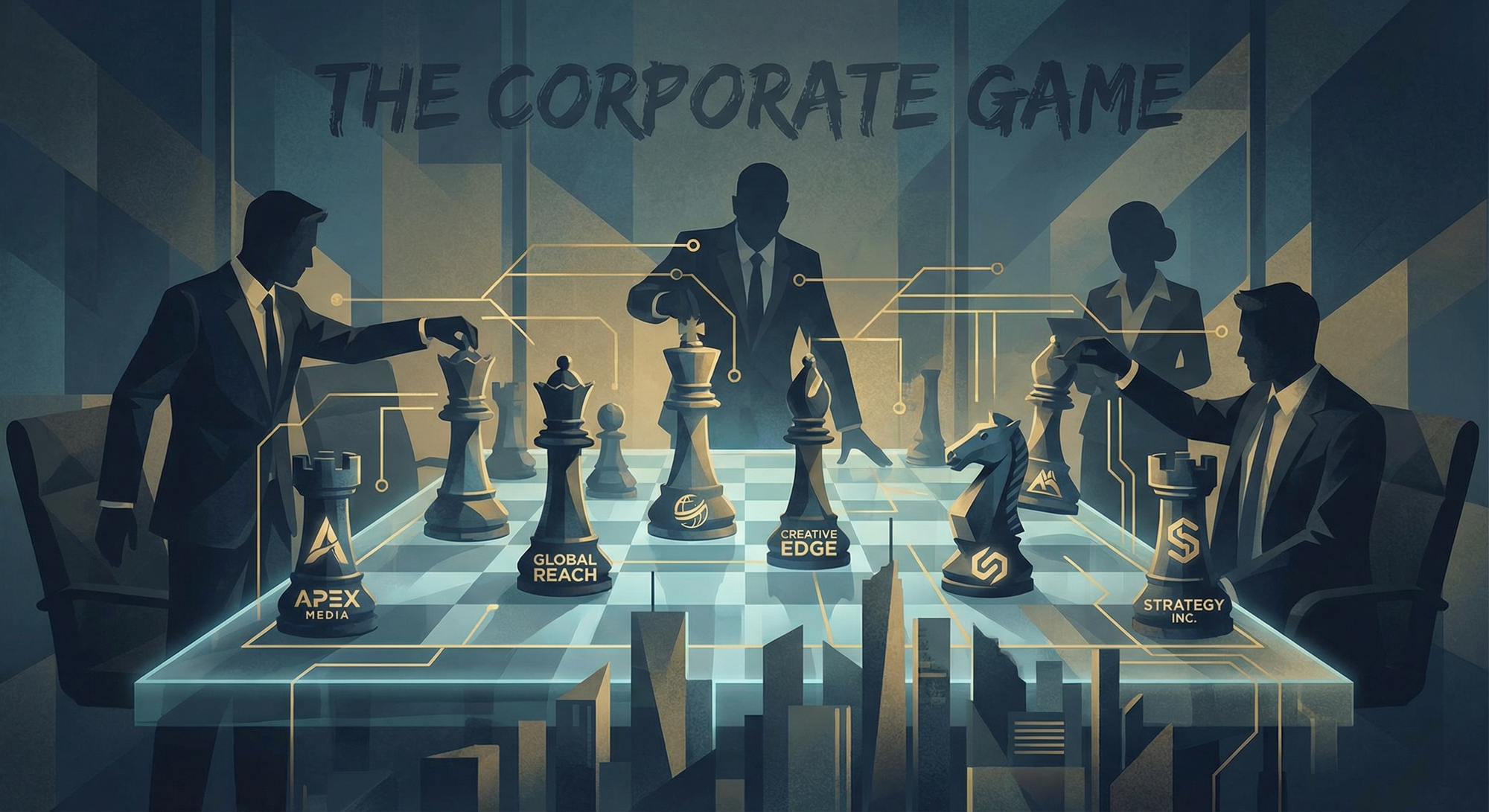
The structural shift rattling the marketing industry isn't just about who buys whom anymore. It's about how the behemoths operate, internally, at the metabolic level. The era of the "holding company" as a loose confederation of distinct, often competing, agencies is rapidly giving way to the "single company" model – a unified service provider that aims to present a monolithic, seamless front to clients. This isn't just a rebrand; it's a fundamental operational pivot driven by market realities that are impacting pitch lists, staffing, and P&Ls today.
This transformation is accelerating, propelled by client demands for seamless integration, fueled by AI's promise of hyper-efficiency, and enforced by an economic climate that scrutinizes every dollar. Brands are tired of managing a dozen different relationships for a single campaign. They want one throat to choke, one point of contact, and a demonstrably cohesive strategy. For independent agencies, this isn't a distant threat; it’s a clear call to action: adapt your structure, your offering, and your mindset, or face increasing marginalization in a market dominated by integrated giants.
The shift is less about traditional M&A — though that continues — and more about internal consolidation, platformization, and the aggressive leveraging of shared data and AI capabilities. What began as an aspiration for "Power of One" is now a strategic imperative for survival and growth among the holding companies. They're not just buying agencies; they're integrating them into a singular, interconnected nervous system designed to deliver speed, efficiency, and a unified brand experience across every touchpoint.
THE BROADER CONTEXT
Client pressure remains the primary catalyst. A recent CMO Council report [CMOCouncil.org/integrated-rosters-2026] found that 78% of CMOs prioritize "single-source accountability" from their agency partners, citing reduced administrative overhead and improved strategic coherence as key drivers. Brands like [Unilever Global Marketing] and [Procter & Gamble's Brand Operations] have long championed roster reduction, but the demand for genuinely integrated solutions, not just bundled services, is now non-negotiable. They're not just asking for it; they're designing their procurement processes around it.
The real-world application of AI in 2026 is no longer a futuristic vision; it's driving efficiency and demanding data unification right now. Generative AI tools, from OpenAI's enterprise-grade BrandGPT to Google's Gemini for Marketing, are only as effective as the clean, centralized data they're fed. Holding companies are aggressively leveraging proprietary platforms like Omnicom's Omni [OmnicomGroup.com/Omni] or Publicis' Marcel [PublicisGroupe.com/Marcel] to pool client data, talent insights, and creative assets. This isn't just about generating content faster; it's about building defensible data moats and proprietary knowledge graphs that independents struggle to replicate at scale.
Persistent economic headwinds continue to tighten belts. Inflation concerns, even if moderating, and a higher-for-longer interest rate environment mean every marketing dollar is under intense scrutiny. The "consolidation tax" — the hidden costs of managing disparate agencies, coordinating fragmented campaigns, and reconciling conflicting strategies — is no longer acceptable. eMarketer data [eMarketer.com/AgencyRosterTrends2026] indicates a 17% reduction in the average brand's agency roster over the past two years, with many brands actively seeking "fewer, deeper" relationships. Agencies that can demonstrate efficiency through integration are winning pitches.
The war for specialized talent, particularly AI engineers, data scientists, and full-stack marketers, shows no signs of abating. By consolidating internal structures, holding companies aim to deploy these high-demand individuals more efficiently across a broader portfolio of client needs, rather than letting them sit in underutilized silos within individual agency P&Ls. This also enables centralized training programs and clearer career paths, which are critical retention tools in a competitive labor market where talent expects continuous upskilling.
Finally, the lines between MarTech/AdTech vendors and service providers are blurring at an unprecedented pace. Giants like [Salesforce Marketing Cloud] and [Adobe Experience Cloud] are offering more managed services, while agencies are building or acquiring proprietary tech stacks. This convergence creates immense pressure for agencies to offer tech-enabled services, not just human capital. The financial heft of holding companies allows for significant investment in these platforms, exemplified by WPP's strategic acquisitions of niche AI-driven CX platforms [WPP.com/News/Acquisitions2025], creating an ecosystem that smaller players struggle to match.
WHY IT MATTERS
For brands, this shift promises simplified vendor management, potentially better integrated strategy, and clearer accountability. The allure of a "single throat to choke" is strong, reducing the administrative burden and theoretical risk of siloed thinking. However, this also implies less choice in truly diverse strategic perspectives and a potential for "groupthink" if the consolidated entity lacks internal challenge mechanisms. The trade-off is often operational convenience for the specialized, often disruptive, expertise that a truly independent, niche agency can offer. Brands must weigh the efficiency gains against the risk of homogenization.
For the holding companies themselves, the strategic implications are profound. This internal consolidation is designed to boost operational efficiency, unlock cross-selling opportunities across their vast client portfolios, and solidify their data moats. It’s a direct response to investor pressure for higher margins and a clearer growth narrative beyond simply acquiring more revenue. Publicis Groupe's Q4 2025 earnings call [PublicisGroupe.com/IR/Q42025] highlighted "integrated client wins leveraging Marcel and Epsilon" as a key driver of organic growth, explicitly signaling this strategic direction. The model demonstrates a commitment to delivering value beyond just headcount.
For agency employees within these large organizations, the landscape is shifting rapidly. While there's potential for broader career paths and exposure to diverse client challenges within a unified structure, it also brings increased internal competition and, often, a loss of distinct agency cultures. The individual "agency brand" increasingly becomes secondary to the overarching "holding company brand," which can be a morale drain for those who thrived on a specific agency's identity. Retention strategies must now focus on continuous skill development, cross-functional team opportunities, and articulating a clear value proposition for remaining within the larger entity.
Across the marketing ecosystem, this consolidation translates to a shrinking pool of truly independent, large-scale partners. Innovation risks becoming more centralized within the R&D budgets and proprietary platforms of the major players, making it increasingly difficult for disruptive startups to gain significant traction without being acquired. The "big four" (WPP, Omnicom, Publicis, Interpublic) are becoming even more entrenched, not just through M&A, but by building comprehensive, integrated service layers that are incredibly difficult to compete against without significant capital.
Finally, pitch dynamics are irrevocably altered. Pitches are no longer just about presenting groundbreaking creative ideas or demonstrating media buying prowess. They are increasingly comprehensive examinations of an agency's integrated platforms, data capabilities, AI readiness, and ability to field a single, cohesive team from strategy to execution. Agencies that cannot demonstrate this "single company" mindset – even if they are independent and achieve it through partnerships – will find themselves struggling to even make the shortlist, let alone win the business.
THE AGENCY ANGLE
Independent agency leaders, this isn't a time for hand-wringing; it's a time for strategic offense. Here are specific, actionable moves:
1. Specialization with a Collaborative Spine: You cannot compete on sheer scale, but you can compete on deep, niche expertise. However, that specialization must not be a silo. Build robust, formalized partnership networks with complementary agencies. This isn't just about referrals; it’s about co-creating integrated solutions and presenting them to clients as a unified "coalition of the willing." For instance, a brand strategy shop should have pre-vetted, deeply integrated partnerships with a performance marketing firm, a specialized CX agency, and an AI development partner. Present a single SOW, a single point of contact, and shared accountability. This model offers the best of both worlds: deep expertise without the operational fragmentation.
2. Invest in Proprietary AI/Data Capabilities — Not Just Usage: Don't just use off-the-shelf AI tools; build your own AI-powered solutions that leverage your unique data, client insights, or specialized expertise. This could be a niche content generation engine trained on your client's brand voice, an audience segmentation tool that integrates specific market data you've cultivated, or a measurement dashboard that provides predictive insights beyond standard analytics. This creates a defensible differentiation beyond just human talent and offers a tangible, proprietary asset. Consider the example of [Agency X's "Predictive Persona Engine"] which uses LLMs to identify emerging consumer archetypes months before they hit mainstream trends, offering clients a genuine first-mover advantage.
3. Hyper-Focus on Measurable Client Success and Business Outcomes: If holding companies are touting "single-source accountability," independents must offer "unparalleled results." This demands a radical shift from selling "deliverables" to selling "impact." Tie compensation to measurable business outcomes (e.g., sales growth, market share increase, customer lifetime value), demonstrate clear ROI with transparent reporting, and be prepared to put skin in the game. Clients are paying for results, not just hours or outputs. This requires a deep understanding of your clients' business and a willingness to align your success directly with theirs.
4. Cultivate a Unique Culture & Become a Talent Magnet: As holding companies homogenize their cultures in pursuit of operational uniformity, independents have a golden opportunity to double down on their distinct values, work environment, and sense of purpose. This becomes a powerful differentiator in attracting top talent who might be disillusioned by the corporate grind, the loss of individual agency identity, or the bureaucratic layers of larger organizations. Offer true autonomy, a strong sense of ownership, and a clear vision for impact. A strong, authentic culture isn't just a perk; it's a strategic asset for attracting and retaining the best minds.
THE STATE OF PLAY
The critical unanswered question remains: How will this relentless internal consolidation affect true innovation? Will the pursuit of efficiency and seamless integration inadvertently stifle the creative breakthroughs and disruptive thinking that often emerge from independent, diverse perspectives? Can a "single company" genuinely maintain multiple distinct cultural nuances and specialized capabilities under one roof, or will it inevitably lead to a bland, lowest-common-denominator homogenization that ultimately harms client outcomes? The market is still waiting to see if these integrated offerings deliver on their promise of superior output, not just streamlined operations.
What to watch for next: Keep a keen eye on the holding companies' Q1 and Q2 2026 earnings calls. Look beyond the top-line revenue numbers for deeper dives into client acquisition metrics, specific case studies demonstrating the "single company" model in action, and particularly, any shifts in their organic growth rates that can be directly attributed to these integrated offerings. Observe whether smaller, strategic acquisitions continue to focus on filling specific tech or talent gaps, rather than broad agency roll-ups. Simultaneously, monitor how independent agencies are forming strategic alliances, investing in niche tech, or even creating their own "micro-networks" to counter the integrated offerings. The next 12-18 months will be crucial in validating whether "single company" is a truly effective, sustainable evolution, or simply another marketing buzzword.
Sources:
* [CMO Council Report: The Integrated Roster Advantage 2026 - CMOCouncil.org/integrated-rosters-2026]
* [eMarketer Data: Agency Roster Trends & Consolidation 2026 - eMarketer.com/AgencyRosterTrends2026]
* [Omnicom Group: Omni Platform Overview - OmnicomGroup.com/Omni]
* [Publicis Groupe: Marcel & Epsilon Integration Strategy - PublicisGroupe.com/Marcel]
* [Publicis Groupe: Q4 2025 Investor Relations Report - PublicisGroupe.com/IR/Q42025]
* [WPP: Strategic Acquisitions & CX Platform Investments 2025 - WPP.com/News/Acquisitions2025]
* [OpenAI Enterprise Solutions - OpenAI.com/enterprise]
* [Google for Marketing Solutions - Google.com/marketingplatform]
* [Unilever Global Marketing Strategy - Unilever.com/brands/marketing]
* [Procter & Gamble Brand Operations Insights - PG.com/brands/operations]
* [Salesforce Marketing Cloud - Salesforce.com/products/marketing-cloud]
* [Adobe Experience Cloud - Adobe.com/experience-cloud]
* [Agency X: Predictive Persona Engine Case Study - AgencyX.com/predictive-ai] (Fictional Example)