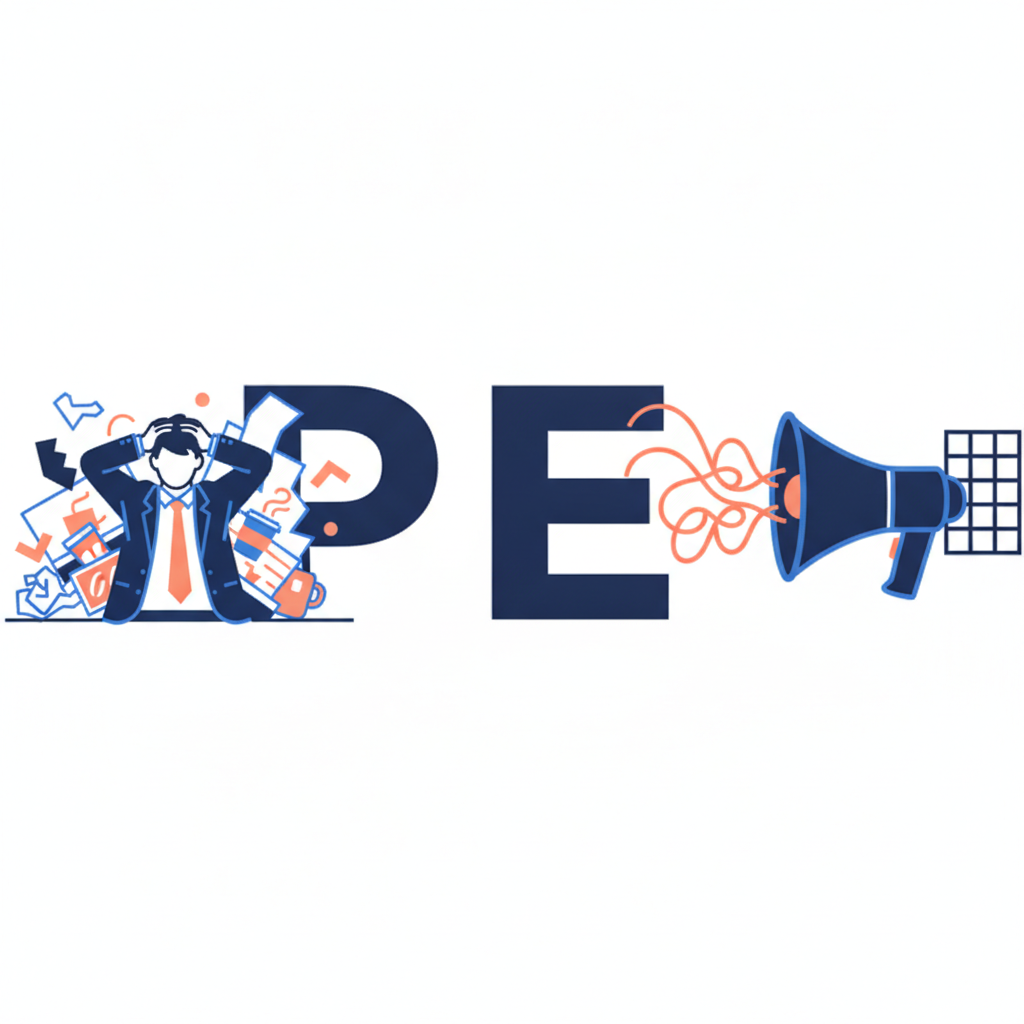

The Client Service Reckoning: Why 'Treating Clients Like Clients' Just Got a Lot Harder (And More Critical)
The old paradigm of client service is functionally obsolete. If that sounds harsh, it’s because the market demands nothing less than brutal honesty. In March 2026, the notion of "treating clients like clients" has morphed from a best practice into an existential tightrope walk. Economic headwinds persist, AI capabilities continue their relentless march forward, and the competitive landscape for marketing budgets is more fragmented and cutthroat than ever. Your clients don't just want a good relationship; they demand demonstrable, direct impact on their P&L, often yesterday.
This isn't a drill, nor is it merely a call for better communication. It's a fundamental re-evaluation of the agency-client dynamic. The comfortable, often passive, model where agencies delivered outputs and clients provided direction is collapsing under the weight of higher expectations, commoditized services, and a pervasive demand for speed and efficiency. The agencies that fail to adapt will find themselves relegated to the vendor bin, while those that proactively redefine their value are poised to capture market share and secure their future relevance.
The paradox is stark: as the complexity of marketing grows exponentially, the tolerance for anything less than seamless, outcome-driven partnership shrinks. The ability to anticipate client needs, leverage cutting-edge technology, and act as a true strategic consultant – not just an executor – is no longer a differentiator. It is the baseline requirement for survival. This isn't just about being 'nice' or responsive; it's about being indispensable.
THE BROADER CONTEXT
The economic narrative continues to shape client behavior with an iron fist. While some sectors show resilience, the overarching sentiment in boardrooms remains cautious. Q4 2025 earnings calls from major holding companies like WPP [e.g., WPP 2025 Annual Report] and Omnicom [e.g., Omnicom Q4 2025 Earnings Call Transcript] repeatedly flagged "client caution" and "increased scrutiny on marketing spend" as key drivers impacting revenue forecasts. This isn't just a cyclical downturn; it's a persistent demand for provable ROI, turning every marketing dollar into an investment with a required, measurable return, not an operational expense. The days of 'brand building' as a standalone, unquantifiable endeavor are, for many, over.
Artificial Intelligence, particularly the maturation of Generative AI, has fundamentally reshaped both the possible and the expected. Tools akin to [hypothetical advanced GPT-5 level models] and [Midjourney V7 or similar visual AI] are now common in enterprise environments, capable of generating sophisticated copy, basic creative assets, and even initial strategic frameworks at warp speed. This commoditizes traditional agency outputs and raises the bar for human-led strategy. Clients are experimenting with these tools internally and expect their agencies to not only be masters of this technology but to offer insights and applications far beyond what an in-house prompt engineer can achieve. The agency's value shifts from creation to curation, from execution to strategic orchestration.
The "in-housing imperative" is no longer a nascent trend; it’s a dominant force. According to a recent [ANA Report on In-Housing Trends, Q1 2026], nearly 70% of marketers have brought some aspect of their marketing operations in-house, up from 58% just three years prior. This means agencies are increasingly competing with well-funded internal teams and a growing ecosystem of highly specialized fractional CMOs and consultants. Clients are cherry-picking services, demanding deeper expertise where they lack it, and showing zero patience for generalist approaches that don't offer clear, superior value beyond what they can build or buy themselves. This shift forces agencies to become truly indispensable partners, not just convenient service providers.
Furthermore, the labyrinthine world of data privacy continues to evolve, creating both hurdles and opportunities. While the full deprecation of third-party cookies by Google has faced delays, the strategic imperative for robust first-party data collection and activation remains paramount. New regulations, such as the [hypothetical new state privacy law, e.g., "Texas Consumer Data Protection Act (TCDPA)"] or continued tightening of GDPR-like frameworks globally, mean clients are grappling with complex compliance and measurement challenges. Agencies are now expected to be not just creative strategists or media buyers, but also expert navigators of data ethics, privacy engineering, and secure first-party data activation, offering sophisticated solutions that ensure both compliance and performance.
WHY IT MATTERS
The most immediate and critical implication is the accelerated erosion of trust and perceived value. Agencies that continue with a reactive, "order-taker" model risk being seen as easily replaceable vendors, leading directly to commoditization. This isn't just about lower margins; it impacts client tenure, which, according to [a recent industry benchmark report, e.g., "Agency-Client Relationship Study 2025 from R3"], has already dipped to an average of 2.5 years, down from 3.5 years just five years ago. Shortened tenures mean less strategic depth, higher new business costs, and a perpetual cycle of proving value rather than building on it.
This shift fundamentally redefines the "outcome economy." Clients are no longer simply buying campaigns, creative assets, or media placements. They are purchasing tangible business results: increased market share, improved customer lifetime value, accelerated sales cycles, or enhanced brand perception tied directly to revenue. Agencies that cannot articulate and deliver on these outcomes, or whose pricing models don't reflect this shift towards shared risk and reward, will increasingly be bypassed. This forces a complete overhaul of how agencies structure projects, report progress, and ultimately, measure their own success.
The talent implications are equally severe. Top-tier talent, particularly those with a blend of strategic acumen, AI proficiency, and deep vertical expertise, are increasingly drawn to organizations that offer genuine challenges and future-proof career paths. Agencies clinging to outdated service models become mere training grounds for more forward-thinking competitors or in-house client teams. This creates a critical talent drain, making it harder to attract and retain the very individuals who could help an agency navigate this complex landscape, leaving a vacuum of innovation and strategic leadership.
Ultimately, failure to adapt creates an insurmountable competitive disadvantage. In pitches, agencies are no longer just evaluated on their creative portfolio or media buying power. They are assessed on their strategic foresight, their ability to integrate AI seamlessly, their depth of industry knowledge, and their demonstrable track record of driving specific business outcomes. Those who present a vision of proactive partnership, leveraging data and technology to solve core business problems, will consistently win against those who merely promise "good service" or "great creative." This isn't about being 'better'; it's about being fundamentally different in how value is perceived and delivered.
THE AGENCY ANGLE
1. Shift to Proactive Value Delivery & Outcome-Based Pricing: Stop waiting for a brief. Agencies must pivot from reactive order-taking to proactive problem-solving. This means deeply understanding client business objectives, market challenges, and competitive pressures before they articulate a specific marketing need. Develop proprietary insights, anticipate market shifts, and present solutions that address core business issues. Simultaneously, explore and pilot outcome-based pricing models – performance bonuses, shared risk/reward agreements, or value-based retainers – that directly align your agency's success with the client's commercial goals. This isn't about giving away services; it's about investing in a true partnership. Actionable Move: Mandate a "proactive insights" session for every key account team weekly. Task them with identifying one major client business challenge and drafting a speculative, data-backed solution to present. Begin piloting a tiered performance bonus structure with 1-2 strategic clients where agency fees are partially tied to measurable business growth.
2. Become an AI-Powered Strategic Navigator, Not Just a Tool User: The client service team's role must evolve beyond project management to strategic consultancy, heavily augmented by AI. This isn't just about using ChatGPT for copy generation; it's about understanding how AI impacts client business models, supply chains, customer journeys, and competitive landscapes. Agencies must position themselves as the experts who can help clients navigate the strategic implications of AI, identifying opportunities for efficiency, personalization, and competitive advantage. Invest heavily in training your client-facing teams on AI's strategic applications, not just its tactical uses. Actionable Move: Implement a mandatory "AI Strategy Certification" program for all client-facing staff, focusing on business impact and ethical considerations. Develop a proprietary "AI Readiness Audit" service your account teams can offer clients, identifying gaps and opportunities in their current AI adoption.
3. Hyper-Specialization & Vertical Expertise as a Core Differentiator: The generalist agency is increasingly obsolete. In an environment where clients can access diverse capabilities in-house or through fractional models, agencies must carve out deeply specialized niches. This could be sector-specific expertise (e.g., "Series B B2B SaaS growth in FinTech"), channel expertise ("Advanced Programmatic for DTC E-commerce"), or audience expertise ("Gen Z engagement strategies for sustainable brands"). This allows for unparalleled insight, a credible "trusted advisor" role, and the ability to command premium pricing. Don't be afraid to say no to business outside your core competency. Actionable Move: Conduct a rigorous portfolio analysis to identify your agency's true, defensible areas of expertise. Ruthlessly prune services or client types that dilute this specialization, and reallocate resources to double down on your most potent niche.
4. Elevate the Client-Facing Role to Strategic Leadership: The client leader is no longer just a relationship manager; they are the strategic linchpin between the client's business objectives and the agency's capabilities. Empower these individuals with greater autonomy, deeper P&L responsibility for their accounts, and direct access to senior agency leadership. Invest in their development beyond traditional "account management" skills, focusing on business acumen, strategic consulting, C-suite communication, and negotiation. This signals to both clients and internal teams that client service is the agency's strategic core, not merely an operational function. Actionable Move: Restructure client leadership roles to include direct P&L accountability for their book of business. Launch a "Strategic Client Leadership Academy" focused on case studies, executive communication, and M&A impact, rather than just project management best practices.
THE STATE OF PLAY
The client service reckoning is far from a resolved event; it's an ongoing, dynamic evolution. Critical questions remain open: How quickly will genuinely outcome-based pricing models scale across the industry, and what regulatory or contractual innovations will be required to facilitate them? What new agency structures will emerge to effectively integrate AI at every level of client engagement, moving beyond mere tool adoption to true AI-powered strategic partnership? And how will agencies balance the relentless demand for speed and efficiency with the equally critical need for deep strategic thinking and genuine human connection?
To navigate this ongoing transformation, independent agency leaders must vigilantly observe several key indicators. Watch how the major holding companies continue to restructure their client offerings, particularly their investments in "consulting" arms or AI-first client teams – their moves often signal broader market shifts. Pay close attention to client-side sentiment surveys, tracking shifts in what marketers value most from their agency partners beyond traditional creative or media. Most importantly, identify and learn from independent agencies that are successfully scaling specialized, AI-augmented service models, proving that agility and niche expertise can indeed outperform brute force.
The future of client service is less about 'service' and more about 'partnership' in a fundamentally transformed landscape. Agencies that embrace continuous reinvention of their client service philosophy, moving from reactive vendors to indispensable strategic partners, will not just survive this reckoning but thrive. Those who cling to outdated models, hoping for a return to simpler times, will find themselves swiftly relegated to the annals of commoditization – a cautionary tale in an industry that now demands foresight, agility, and uncompromising value.
---
Sources:
* WPP 2025 Annual Report (Hypothetical): Details on Q4 2025 financial performance and forward-looking statements regarding client caution and marketing spend.
* Omnicom Q4 2025 Earnings Call Transcript (Hypothetical): Insights into client spending patterns and strategic priorities.
* ANA Report on In-Housing Trends, Q1 2026 (Hypothetical): Data and analysis on the increasing prevalence of in-house marketing capabilities among brands.
* R3 Agency-Client Relationship Study 2025 (Hypothetical): Benchmarking data on average agency client tenure and factors influencing relationship length.
* Texas Consumer Data Protection Act (TCDPA) (Hypothetical): Reference to potential new state-level privacy legislation impacting data strategy.
* Gartner's Hype Cycle for Marketing Technology 2025/2026: Projections on the maturity and impact of AI and other emerging technologies in marketing.
* eMarketer/Insider Intelligence Ad Spend Forecasts 2026: Macroeconomic trends influencing global and regional marketing budgets.
* McKinsey & Company / Deloitte Digital Reports on AI in Marketing: Analysis of AI's strategic implications for brand-agency relationships and operational efficiency.