
The Holding Company's Long Decay: Welcome to the Era of Hyper-Specialized, AI-Driven Ecosystems
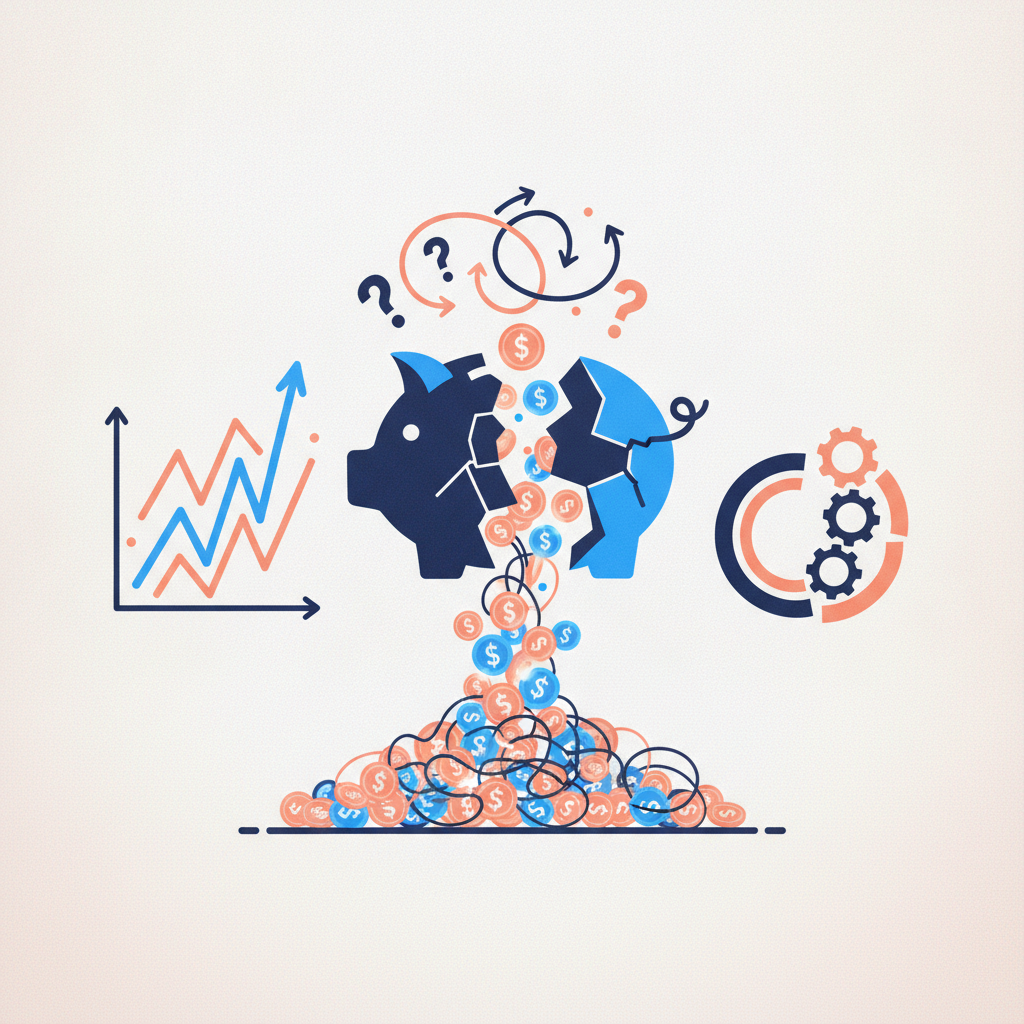
The obituaries for the traditional holding company model have been written for years, often prematurely. But let's be blunt: as of March 2026, the patient isn't just ailing; it's actively decomposing, and what's rising from the ashes bears little resemblance to the monolithic structures of old. This isn't a sudden death, but a long, drawn-out process of disaggregation, fueled by client impatience, technological acceleration, and a profound shift in how value is perceived.
What we're witnessing isn't merely a change in ownership structures, but a fundamental re-architecture of the marketing services industry itself. Brands aren't just seeking "integrated solutions" anymore; they're demanding hyper-specific, demonstrable expertise delivered with unprecedented speed and precision. The market has moved, and the lumbering giants, despite their frantic attempts at internal restructuring and "AI initiatives," are increasingly outmaneuvered by a new breed of agile, tech-forward specialists.
THE BROADER CONTEXT
Client frustration has been the primary accelerant. The promise of integrated, full-service solutions from holding companies frequently devolved into internal turf wars, diluted talent pools, and generic output that failed to move the needle. A recent [ANA 2025 Agency Relationships Survey](https://www.ana.net/content/show/id/agency-relationships-survey-2025-overview) revealed that nearly 70% of marketers expressed a preference for specialist agencies over full-service networks for emerging technology implementation and data science, citing a lack of depth and agility from larger players. Brands aren't just paying for services; they're paying for solutions to very specific, often complex, problems.
This demand has fueled an explosion of independent, highly specialized agencies. These aren't just boutique shops; they are often well-funded, ex-holding company talent pools focused on niche capabilities like generative AI content at scale for specific verticals, privacy-centric first-party data activation, advanced programmatic CTV optimization, or Web3 experience design. Firms like [Known](https://known.com/) (not a holding co, but a hybrid model) or the rising tide of PE-backed collectives focused on specific tech stacks are demonstrating that agility and deep expertise trump sheer scale when it comes to delivering measurable impact.
Meanwhile, the "Big Four" consultancies—Accenture Song, Deloitte Digital, PwC, and EY—continue their aggressive land grab, not just acquiring creative agencies but also integrating deep technological and business transformation capabilities. They're positioning themselves as strategic partners for enterprise-level change, often absorbing roles traditionally held by agencies by offering end-to-end solutions that span from business strategy to marketing execution. Their ability to speak the language of the C-suite, backed by vast consulting budgets, gives them a distinct advantage in high-value engagements.
The tech giants are equally formidable players. Google, Meta, Amazon, and Adobe aren't just platforms; they're increasingly offering sophisticated "agency-like" services, from advanced analytics and media optimization to creative production toolkits and data management. With the direct access to proprietary data and AI capabilities, these platforms are reducing the need for traditional intermediaries for specific tasks, forcing agencies to articulate value far beyond basic execution. For instance, Amazon's advertising solutions now include robust creative services and data attribution models that directly compete with agency offerings.
This shift has also redefined in-housing. It's no longer about bringing everything in-house, but about strategically owning core competencies like first-party data strategy, brand governance, and some content production, while carefully selecting external specialists for complex execution or scalable creative. Brands like [Procter & Gamble](https://us.pg.com/) continue to refine their internal agency models, demonstrating a hybrid approach that leverages internal teams for speed and brand consistency, alongside a roster of external experts for specialized tasks. The "in-house vs. agency" debate is obsolete; the future is a dynamic, fluid ecosystem.
WHY IT MATTERS
For brands, the implications are profound. The traditional "agency of record" model is now a relic for most. Instead, brands are assembling bespoke rosters of hyper-specialized partners, often orchestrated by a lean, sophisticated internal marketing operations team. This demands greater internal project management capabilities, but in return, promises best-in-class expertise tailored to specific business challenges, leading to demonstrably better ROI. The focus shifts from managing relationships to managing outcomes.
The entire marketing ecosystem is experiencing a radical redistribution of power. Talent is migrating at an unprecedented rate, leaving the perceived security of holding companies for the dynamism and specialized focus of independent firms or in-house teams. The "talent war" is no longer about attracting generalists but about securing and retaining top-tier specialists—AI engineers, data scientists, privacy experts, and niche creative technologists. This talent shift is driving up costs for specialized skills, making efficient resource allocation critical.
Media buying, once a scale game, is now a data and AI game. The value is no longer in bulk discounts but in proprietary algorithms, real-time optimization, and deep platform integrations that drive measurable performance against specific KPIs. Agencies that can't demonstrate a clear advantage here, beyond simply executing buys, will be increasingly marginalized as brands leverage in-house programmatic teams or platform-direct solutions. The shift towards first-party data and privacy-centric advertising further elevates the role of advanced analytics and ethical data handling, areas where independent specialists can often outmaneuver larger, more rigid structures.
THE AGENCY ANGLE
Independent agency leaders, this isn't just noise; it's your opportunity to dominate. Here's what you need to do to thrive in this hyper-specialized, AI-augmented landscape:
1. Double Down on Hyper-Specialization & Own Your Niche: The era of "full-service for SMBs" is over. What is your one thing that no one else does as well? Be the undisputed expert in generative AI for personalized video at scale, or privacy-compliant first-party data activation in regulated industries, or hyper-localized influencer marketing for Gen Z. Don't just claim specialization; demonstrate it with case studies, proprietary methodologies, and thought leadership. Your niche isn't a limitation; it's your competitive moat.
2. Master AI & Automation as a Core Competency: This goes far beyond simply using ChatGPT for headlines. Integrate AI tools deeply into your workflows for content creation, media optimization, data analysis, trend forecasting, and even client reporting. Offer "AI-powered [your niche service]" as a distinct, value-added offering. This allows smaller teams to achieve previously impossible scale and precision, delivering results faster and more cost-effectively than traditional models. Consider developing proprietary AI models or leveraging specific platform APIs to create unique efficiencies for your clients.
3. Forge Strategic, Project-Based Alliances (Not Networks): The holding company model failed at true integration. You can succeed by building genuine, project-specific partnerships with other best-in-class independents. Think "alliance of experts" rather than "one-stop shop." For a complex client brief, assemble a bespoke team of independent specialists—one for AI-driven creative, another for advanced programmatic, a third for Web3 strategy. Share revenue transparently, build trust, and market these collaborative capabilities as a flexible, superior alternative to a single, diluted agency.
4. Redefine Value & Pricing Models: Ditch the hourly rate. In an AI-accelerated, specialist world, you're selling outcomes, IP, and unique expertise, not hours. Explore value-based pricing, performance-based retainers, or subscription models for specific AI-driven services. Articulate your value in terms of measurable business impact—cost savings, revenue growth, efficiency gains—rather than deliverables. Your ability to deliver 10x the output with 1/10th the human effort due to AI is a massive value proposition; price it accordingly.
5. Invest in Talent as Your Proprietary IP: Your people are your product, especially your specialists. Foster a culture of continuous learning, particularly in AI, data science, and emerging platforms. Attract top-tier talent by offering genuine autonomy, challenging work, and the opportunity to lead innovation, rather than being a cog in a large machine. Your agency's ability to consistently attract and retain the sharpest minds in your niche will be your most significant differentiator.
THE STATE OF PLAY
The holding companies, while diminished, are not entirely gone. They are evolving, often painfully, into leaner, more financially oriented entities, potentially becoming asset managers for a portfolio of specialized firms, or shedding non-core businesses to focus on a few key areas. Watch their Q1 and Q2 2026 earnings calls for continued emphasis on "efficiency," "AI investments," and "strategic divestitures." The market will continue to exert pressure for tangible, not aspirational, results.
The open questions revolve around the "new integration." Clients still desire seamless experiences, but they demand them without sacrificing specialization. Will new platforms emerge to orchestrate these distributed ecosystems? Will brands themselves become the ultimate integrators, leveraging advanced internal marketing ops teams and AI-powered project management tools? Or will a new class of highly strategic, tech-savvy "lead agencies" emerge whose primary role is to curate and manage these bespoke specialist rosters?
The role of regulation, particularly around data privacy ([GDPR](https://gdpr-info.eu/), [CCPA](https://oag.ca.gov/privacy/ccpa), and new state-level mandates) and AI ethics, will continue to shape the permissible and valuable. Agencies that can navigate this complex landscape with expertise and integrity will command a premium. The future isn't about the biggest agencies, but the smartest, most agile, and most specialized.
---
Sources:
* eMarketer Q1 2026 Digital Ad Spend Report (Projected Trends & Growth Areas)
* ANA 2025 Agency Relationships Survey (Published Q4 2025)
* Gartner's Hype Cycle for Advertising, 2025-2026 (Focus on AI & Data Ethics)
* Ad Age Data Center, "Independent Agency Growth Trends" (Q4 2025 Analysis)
* PwC Global Entertainment & Media Outlook 2025-2026
* WPP, Publicis Groupe, Omnicom Q4 2025 Earnings Transcripts (Available via investor relations)
* TechCrunch, "Private Equity's New Favorite Play: Niche Marketing Agencies" (Recent analysis, late 2025/early 2026)